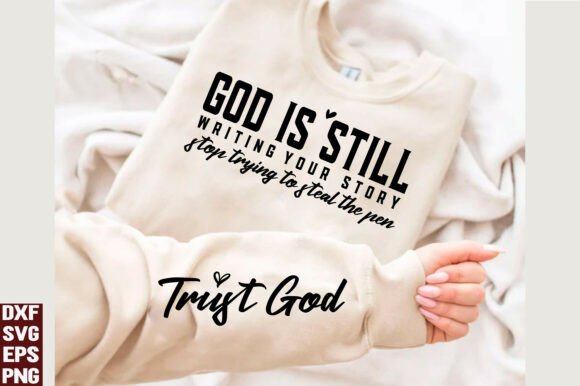
A Designer's Take on "God is Still Writing Your Story"
As someone who turns digital files into physical, stitched art daily, my first question with any new design is always, "How will it live in the real world?" Let's walk through that exact thought process with the "God is Still Writing Your Story" design, examining it not as a mere graphic, but as a potential embroidery project for clients, gifts, or your shop.
The Immediate Mood and Where It Naturally Belongs
The phrase itself carries a quiet, hopeful assurance. As a visual piece, it leans toward a sentiment that’s personal and uplifting. This isn’t a loud, declarative statement; it’s more intimate. That mood immediately points me toward projects meant for comfort, encouragement, or personal reflection. I picture this design stitched onto a cozy, well-loved sweatshirt, a soft baby blanket in a nursery, or a kitchen towel for someone going through a season of change. It feels like a design for close-knit gifts or boutique items that speak to a heartfelt niche, rather than mass-market apparel.
Visual Personality and Layout Considerations
The layout and typography implied by the title suggest a centered, likely script-based design. The "story" part often invites a slightly more decorative treatment. For embroidery, this means paying close attention to stitch clarity. Script lettering needs smooth satin stitches or a clean running stitch outline to remain legible and elegant, especially when stitched. The level of detail will determine its best home. If it's a relatively simple, clean script, it becomes versatile. If it includes more intricate decorative accents, then we need to think about larger hoop sizes and stable fabrics to preserve every lovely detail.
Performance Across Real Embroidery Projects
Let's get practical. Imagine I'm preparing a custom embroidered tote bag for a client's birthday gift. This design would sit beautifully on the front panel, a daily reminder carried along. On a mid-weight canvas tote, with proper stabilizer, the stitches would lay flat and hold up to use. The message adds a layer of perceived value—it’s not just a bag; it’s an encouraging companion.
For a small business owner creating a line of heartfelt merchandise, this embroidery file could anchor a whole collection. A beautifully embroidered patch featuring this phrase could be applied to aprons, caps, or pillow covers, creating consistent brand storytelling. On a sweatshirt, especially in a soft, contrasting thread color, it becomes a premium, wearable keepsake. For baby items, like a embroidered knit blanket, it shifts into a blessing and a promise, often chosen by parents or grandparents.
Where This Design Should Be Used with Care
Every design has its ideal applications and its tricky ones. The potential challenges here revolve around scale and fabric.
- Small Hoop Sizes & Tiny Lettering: If you try to shrink this down for a baby hat or a small corner of a tea towel, the script lettering might lose clarity. Test it first on scrap fabric.
- Textured or Stretchy Fabrics: On very textured linen or a stretchy polo shirt collar, fine details can get lost. A good stabilizer is non-negotiable here.
- Dark Fabric Backgrounds: This is about thread color contrast. A light-colored satin stitch on a dark navy sweatshirt can look stunning, but you must ensure your stitch density is sufficient so the design doesn’t feel sparse.
- Curved Surfaces like Caps: Embroidering on a cap requires planning. The curvature can distort a centered design. You might need to adjust the placement or choose a slightly simplified version of the file to ensure it looks balanced from every angle.
In all these cases, the key is the test stitch. Run it on a scrap of the actual fabric you plan to use. It’s the single best practice for any serious embroidery designer or decorator.
How This Design Affects Your Product and Your Customer
Beyond the stitch itself, this design influences the finished product's appeal and perception. When executed well, it elevates a simple item. A clean, professional embroidery of "God is Still Writing Your Story" on a pillow cover feels thoughtful and high-value, boosting customer trust in your handmade craftsmanship. It tells a story, which enhances giftability—people buy it not just for the object, but for the meaning it carries.
For creative entrepreneurs, it offers a way to connect with a specific audience looking for encouragement and faith-based aesthetics. In your Etsy listings or craft fair booth, a well-photographed mockup of this design on a tasteful product (like a neutral-toned tote bag) can drive engagement because it resonates emotionally. It supports brand consistency for shops focused on uplifting, personalized products.
Practical Designer Notes Before You Hoop It Up
Before you commit this design to a client's order or your next batch of shop merchandise, here’s my checklist:
- Test the embroidery file on scrap fabric first, ideally in both a light and dark color to judge thread contrast.
- Review the stitch density in your software. Does the fill stitch look solid enough for the fabric you’re using?
- Confirm the hoop size needed. Does the design require a larger hoop for detail preservation, limiting its use on smaller items?
- Inspect the small details, especially in the words "Writing" and "Story." Are there any corners or connections too fine for your machine or chosen stitch type?
- Consider creating simple black and white printable mockups to visualize placement on different products before you stitch.
- Always use the proper stabilizer for your fabric type—this is critical for maintaining the design’s clarity after washing.
- Most importantly, check the licensing terms provided with this digital file. Understand clearly if it’s for personal use, commercial use, or both before selling any finished products or incorporating it into your commercial embroidery projects.
Embroidery transforms a digital graphic into a tactile, enduring piece. The "God is Still Writing Your Story" design, with its resonant message, has the potential to become a cherished element on a wide range of handmade products. By approaching it with this practical, designer-minded scrutiny—thinking about fabric, scale, execution, and final context—you ensure that the story it tells is told beautifully, stitch by stitch.